Bringing your family
Publish date: 29 July 2026
There are a few things to bear in mind before moving to Stockholm with your partner or other family members.
Learn Swedish – For free
Swedes are happy to speak English, but not being able to speak Swedish might make it harder to find a job. SFI (Svenska För Invandrare or Swedish For Immigrants) is a free Swedish language course for non-native speakers living in Sweden. We recommend that you get started with SFI as soon as possible. Also, take a look at SIFA (Stockholm Intense Swedish for Academics).
How to help partners get settled
Arriving in a new city as the partner of someone who has moved to Stockholm for work presents a unique set of challenges. One organization working actively to assist job-seeking newcomers is Stockholm Academic Forum, which runs the Stockholm Dual Career Network, a non-profit network for the partners and spouses of international talent.
A very family-friendly city
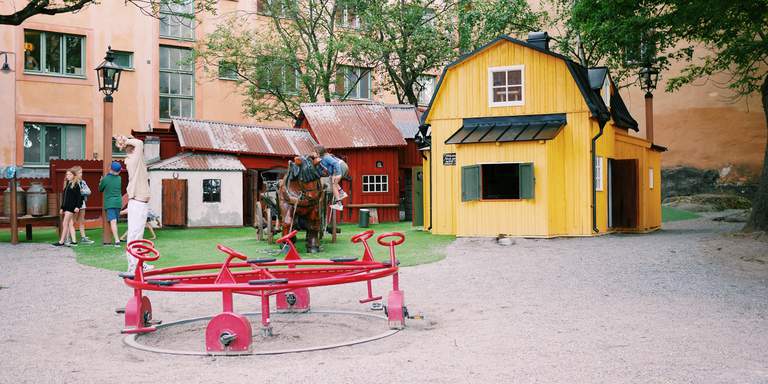
Stockholm is an excellent place to be both a parent and a child. Discover why Sweden is a great place to combine family-life with career, from tax-funded schooling to baby-friendly public spaces.
Work and residence permits for family members
Family ties include spouses, common-law spouses, registered partners, and either your or your partner's unmarried children under the age of 21.
EU/EEA citizens
If you are an EU/EEA citizen yourself, you can use your right of residence, which allows you to live and work in Sweden without a residence permit.
To get listed in the Swedish Population Register and obtain a Swedish personal identity number, you need to contact the Swedish Tax Agency.
Non-EU citizens
If you are a citizen a non-EU/EEA country and want to live with your family member who has right of residence in Sweden for more than three months, you need to apply for a residence card. You can apply for a residence card while you are in Sweden.
A residence card gives you the right to live and work in Sweden, as long as your family member has right of residence through work, studies, as a self-employed person, or by living on a pension or having sufficient funds to support both themselves and you.
For all information about residency and work permit, please visit the Swedish Migration Agency’s website: Family of EU/EEA citizens who want to apply for a residence card – Swedish Migration Agency
Childcare and schools
Childcare services are available for all children aged one and over, provided they have a Swedish personal identity number. Parents pay a fee based on household income and the child’s attendance. Get in touch with your local municipality (kommun) for more information.
Between ages 6-16, children go to compulsory comprehensive school. After completing the ninth grade, 90% continue to a three-year upper secondary school (gymnasium) with most programs leading to a vocational diploma and to qualifications for studies at a university or university college (högskola). All education provided by the state is free.
Contact your local municipality (kommun) or district (stadsdelsförvaltning) in Stockholm for more information about schools with other language profiles.
International schools in Stockholm
Stockholm has a number of international schools. Grow Internationals has pulled together plenty of useful information including a list of international schools in Stockholm.
Parental leave
Sweden has one of the most generous parental leave (föräldraledighet) systems in the world. Parents are granted 480 days of leave per child, and 420 of these days are paid at a rate of 80% of your salary up to a limit of SEK 910 a day.
To qualify for basic benefits (180 SEK a day for 480 days) you need to be a legal resident of Sweden. It’s not your employer who covers the cost of your parental leave benefit but the Swedish Social Insurance Agency (Försäkringskassan).
Försäkringskassan offers more information on parental leave.
Swedish terms you should be aware of:
- Parental leave = föräldraledighet
- Maternity leave = mammaledighet
- Paternity leave = pappaledighet